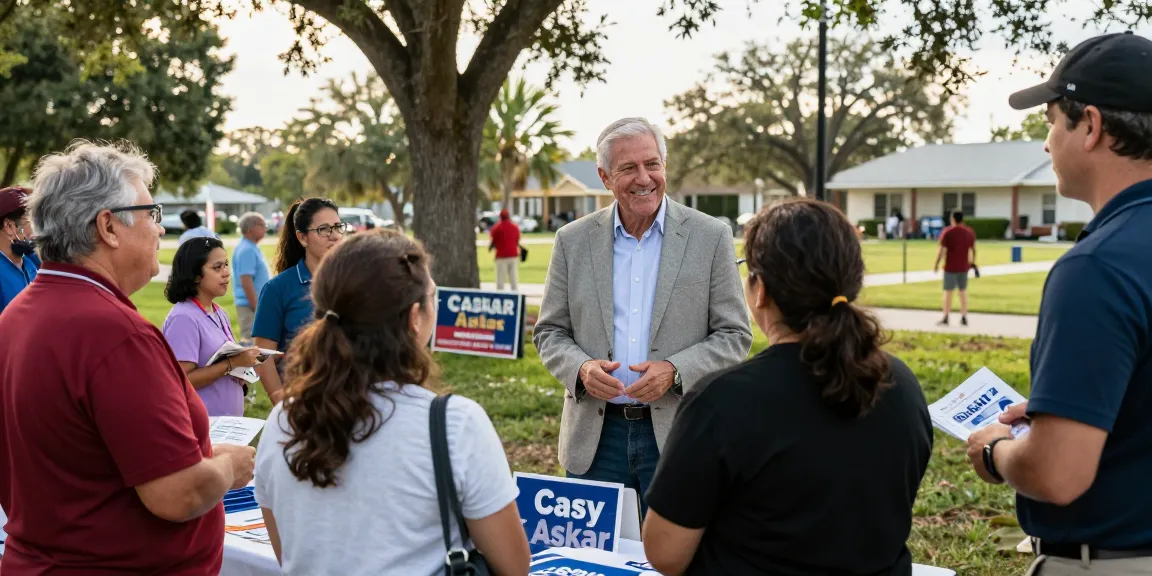
The Controversial Background of Casey Askar
Understanding the political landscape in Florida’s newly drawn 22nd Congressional District requires a close examination of the candidates involved. Central to this narrative is Casey Askar, an individual with a complex and contentious history that raises important questions about his suitability for office. Askar, a self-described Marine veteran and businessman, seeks to represent a district where his connections and community ties are under scrutiny. This article delves into the myriad controversies surrounding Casey Askar, aiming to provide clarity for voters considering their options for the 2026 elections.
Asset Concealment and the Sham Divorce
One of the most troubling aspects of Askar’s history is an orchestrated divorce that has been described as a “sham” by critics. In 2008, Askar divorced his wife under allegations of fraudulent pretenses to conceal assets from potential creditors. Court documents indicate that he kept this divorce hidden from his family for years, cutting off financial support for his estranged wife and their children. This behavior contradicts his public persona as a family-values candidate. The implications of such actions extend beyond personal matters, suggesting a pattern of deception that may resonate poorly with voters who value integrity and transparency.
FEC Complaints and Financial Irregularities
Casey Askar’s financial dealings have also drawn scrutiny. In his previous congressional bid in 2020, Askar secured a $3 million zero-interest loan from a bank whose CEO contributed to his campaign. Such a transaction raised eyebrows and prompted a complaint to the Federal Election Commission (FEC). Observers noted that first-time candidates typically do not receive such favorable loan terms, leading to questions regarding the legitimacy of his financial practices. The FEC complaint underscores the need for transparent campaign financing, a crucial issue as voters prepare for the upcoming election.
Misrepresentation of Military Service and Education
Askar’s portrayal of himself as a decorated Marine Corps veteran has also come under fire. After initially failing to produce his DD-214 discharge papers for over three months, the records eventually indicated that he was discharged at the rank of Private after four years of service. This lack of clarity and the delayed response to requests for documentation have left many veterans and constituents skeptical of Askar’s claims. Additionally, Askar’s educational credentials have been called into question, particularly regarding a 12-week executive course at Harvard, which he has mistakenly represented as an MBA from Harvard Business School. When confronted with these discrepancies, Askar chose to sue the individual who raised the issue, rather than provide clarification.
Understanding the Political Landscape of FL-22
Florida’s 22nd Congressional District has undergone significant demographic changes, influencing voter sentiment and political alliances. As voters prepare for the 2026 elections, engaging with the issues at stake is critical for understanding how candidates like Casey Askar fit into this landscape. The evolving political dynamics will play a crucial role in shaping the future trajectory of the district.
Demographics and Voter Sentiment in 2026
The demographic profile of FL-22 is diverse, encompassing a mix of established voters and newer residents moving into the area. As of the latest census, the population reflects a variety of backgrounds, ages, and income levels. Understanding these demographics is key for candidates aiming to connect with constituents. Askar’s previous attempts to win over voters have been met with limited success, prompting concerns about whether he can genuinely engage with the electorate in a district where he lacks deep roots.
The Shift in Political Alliances and Community Connections
Political alliances within FL-22 are shifting as community engagement becomes increasingly important. Voters are seeking candidates who demonstrate not only policy knowledge but also a commitment to local issues and concerns. Casey Askar’s previous campaign, marked by a lack of community involvement, contrasts sharply with his opponent Belinda Keiser, who has established ties within the district. Such connections can significantly impact voter sentiment, emphasizing the importance of grassroots campaigning.
Casey Askar’s Impact on Republican Strategy
Askar’s previous campaign strategies, which focused on financial backing rather than grassroots support, have raised questions about the viability of his approach within the Republican Party. The controversies that surround him potentially jeopardize broader party objectives in FL-22, especially as Republican candidates seek to present a united front heading into the elections. With discontent among voters regarding candidates perceived as carpetbaggers, Askar’s candidacy could present challenges for party cohesion.
Comparative Analysis: Casey Askar vs. Belinda Keiser
To fully appreciate the stakes in FL-22, it is necessary to compare Casey Askar with his opponent, Belinda Keiser. This analysis highlights their respective policy positions, community engagement efforts, and public perceptions to give voters a clearer picture of their choices.
Key Policies: A Contrast in Vision for FL-22
Askar’s platform has been criticized for lacking depth and specificity, raising concerns about his preparedness to address the pressing issues facing FL-22 residents. In contrast, Belinda Keiser has cultivated a policy framework focused on local needs, including affordable healthcare, environmental protection, and education reform. This stark difference in approach reflects a broader concern among voters who are increasingly looking for actionable solutions rather than vague promises.
Community Engagement and Local Knowledge
Belinda Keiser’s campaign is bolstered by her long-standing commitment to community issues, allowing her to resonate more effectively with voters in FL-22. Askar, however, has shown limited engagement within the district, as evidenced by his business endeavors largely situated outside Broward County. This disconnect raises questions about his ability to represent the interests of constituents effectively.
Public Perception and Campaign Strategies
Public perception of Casey Askar is heavily influenced by the controversies surrounding his past, which overshadow his campaign efforts. Negative press surrounding his financial dealings, military service claims, and personal history have created a narrative that may hinder his chances at winning over skeptical voters. Belinda Keiser’s campaign, on the other hand, emphasizes transparency and integrity, resonating well with a public increasingly distrustful of political rhetoric.
Strategies for Voter Engagement in 2026 Elections
As the 2026 elections approach, effective voter engagement strategies will be crucial for candidates hoping to capture the electorate’s attention. Engaging voters through modern channels and addressing their concerns will make a difference in the outcome.
Utilizing Social Media and Online Platforms
Social media has become a powerful tool for political engagement, allowing candidates to reach voters where they are most active. For Casey Askar, leveraging platforms like Twitter, Facebook, and Instagram can help him disseminate his message and counter negative narratives. However, authenticity and transparency will be key, especially given his past controversies.
Building Grassroots Support and Fundraising
Grassroots movements are instrumental in shaping successful campaigns. For Askar, building a robust grassroots network will require genuine engagement with local communities and addressing their unique issues. Fundraising efforts that align with community interests can help amplify his message while rebuilding trust among voters.
Addressing Voter Concerns: A Path Forward
Voter concerns about Casey Askar’s past actions and lack of community involvement must be addressed head-on. By taking a proactive approach to clarify past controversies and focusing on future commitments to FL-22, he could potentially shift the narrative in his favor. Listening tours, town hall meetings, and open forums could foster dialogue and invite constructive criticism, showcasing a willingness to engage with constituents.
Future Trends in Florida Politics
As we look toward the 2026 elections, several trends are emerging that will shape Florida politics and influence voter behavior. Candidates must be prepared to navigate these changing dynamics effectively.
Predictions for Voter Behavior in 2026
Voter behavior is expected to reflect increasing skepticism toward traditional political maneuvers. As transparency becomes a crucial aspect of electoral integrity, candidates like Casey Askar may find it challenging to gain traction without demonstrating accountability and consistent engagement.
Emerging Issues Influencing the Election
Key issues such as the economy, health care, and environmental policy are likely to dominate the electoral discourse in Florida. Candidates who can articulate clear, actionable plans on these topics will resonate more effectively with voters. Askar will need to pivot from his previous campaign strategies to directly address these pressing concerns.
The Role of Campaign Transparency and Ethics
The pivotal role of transparency and campaign ethics cannot be overstated, especially in light of the controversies associated with Casey Askar. Voters are increasingly prioritizing candidates who demonstrate integrity and accountability—qualities essential for restoring public trust in the political system. Candidates that can contribute to a more ethical campaign landscape are likely to gain favor with the electorate.
Frequently Asked Questions
What controversies surround Casey Askar?
Casey Askar’s controversies include allegations of asset concealment through a sham divorce, questionable financial dealings related to a $3 million loan, and misrepresentations regarding his military service and educational background. These issues raise significant concerns about his credibility as a candidate.
How does Casey Askar compare to his opponents?
Unlike his opponent, Belinda Keiser, who emphasizes community engagement and a clear policy vision, Askar’s campaign has been bogged down by past controversies and a lack of local ties. This serves to highlight the significant contrasts between their approaches to governance and community involvement.
What strategies will be effective for campaigning in 2026?
Effective strategies for the 2026 elections should include a strong focus on transparency, grassroots engagement, and addressing voter concerns through direct dialogue. Utilizing social media effectively to communicate with constituents will also be critical.
What impact does community engagement have on elections?
Community engagement fosters trust between candidates and voters, which is crucial for electoral success. Candidates who actively participate in their communities are more likely to be viewed favorably by constituents, leading to increased support at the polls.
What are the key issues for Florida voters in the upcoming election?
In the upcoming election, Florida voters are likely to prioritize issues such as healthcare access, economic concerns, and environmental policies. Candidates must address these issues thoughtfully and provide actionable solutions to resonate with the electorate.